

KEPHIS Receives 40 Tablets for Pest Surveillance From IPPC through USDA-APHIS To Mitigate Crop Losses
Headquarters, Nairobi - KEPHIS has received 40 tablets to be used by inspectors in pest surveillance in the country in a bid to promote food security.
The state of the art gadgets will ensure that KEPHIS plant health inspectors are well-equipped to tackle pest challenges using the latest technologies. The tablets are equipped with unique mobile applications designed for conducting active surveillance and rapid detection of pests that can have severe implications for food security and trade. The Food and Agriculture Organization of the United Nations estimates that globally, pests account for 40% of crop losses leading to food insecurity in many countries. Kenya has experienced several pest incursions which have affected food security and trade. These include the Fall Army Worm, the Maize Lethal Necrosis Disease, the Papaya Mealy Bug, Golden Apple Snail and fruit flies among others.
The tablets were provided by the International Plant Protection Convention (IPPC) through the Africa Phytosanitary programme (APP), with funding from the United States Department of Agriculture (USDA) Animal and Plant Inspection Service (APHIS). This is part of implementation of the Africa Phytosanitary Program (APP) that is currently coordinated by IPPC to be implemented in 54 African countries. Kenya is part of the 11 pilot countries implementing the program.
“By enhancing the capabilities of phytosanitary staff within national plant protection organizations such as KEPHIS, the IPPC seeks to leverage advanced science and modern digital technology for effective pest surveillance, detection, control, and prevention, “said Mr. Arop Deng, the Officer-in-Charge for Day-to-Day matters at the IPPC Secretariat.
KEPHIS Director of Phytosanitary and Biosecurity Dr Isaac Macharia who represented the managing director Prof. Theophilus Mutui reiterated the importance of the gadgets as they will play a key role in data collection and analysis.
“The tools will assist in collecting data on pests to support early warning and rapid response,” he stated.
As global trade expands, particularly in agricultural commodities like food crops, the risk of pest introduction and spread across borders increases. Countries therefore need to actively monitor these risks and use accurate diagnostics to determine the presence or absence of plant pests. This information is crucial for making sound phytosanitary decisions, effectively managing risks, and protecting borders.
KEPHIS inspectors will carry out pest surveys, routinely investigating the presence or absence of pests and receiving information on trends and factors such as changing weather patterns. Currently Kenya has initiated application of the technology for surveillance of key quarantine pests such as Banana Bunchytop virus, Fusarium wilt-TR4 and xylella fastidiosa.
“The IPPC is confident that with this pest monitoring data, countries like Kenya will be in a better position to support their crop exports with verifiable pest status information. The IPPC is the intergovernmental treaty that aims to protect the world's plants, agricultural products and natural resources from plant pests. Ratified by 185 contracting parties, including Kenya, the IPPC develops, adopts and promotes the application of International Phytosanitary Measures (ISPMs) as the main tool to safeguard global food security, facilitate safe trade and protect the environment.
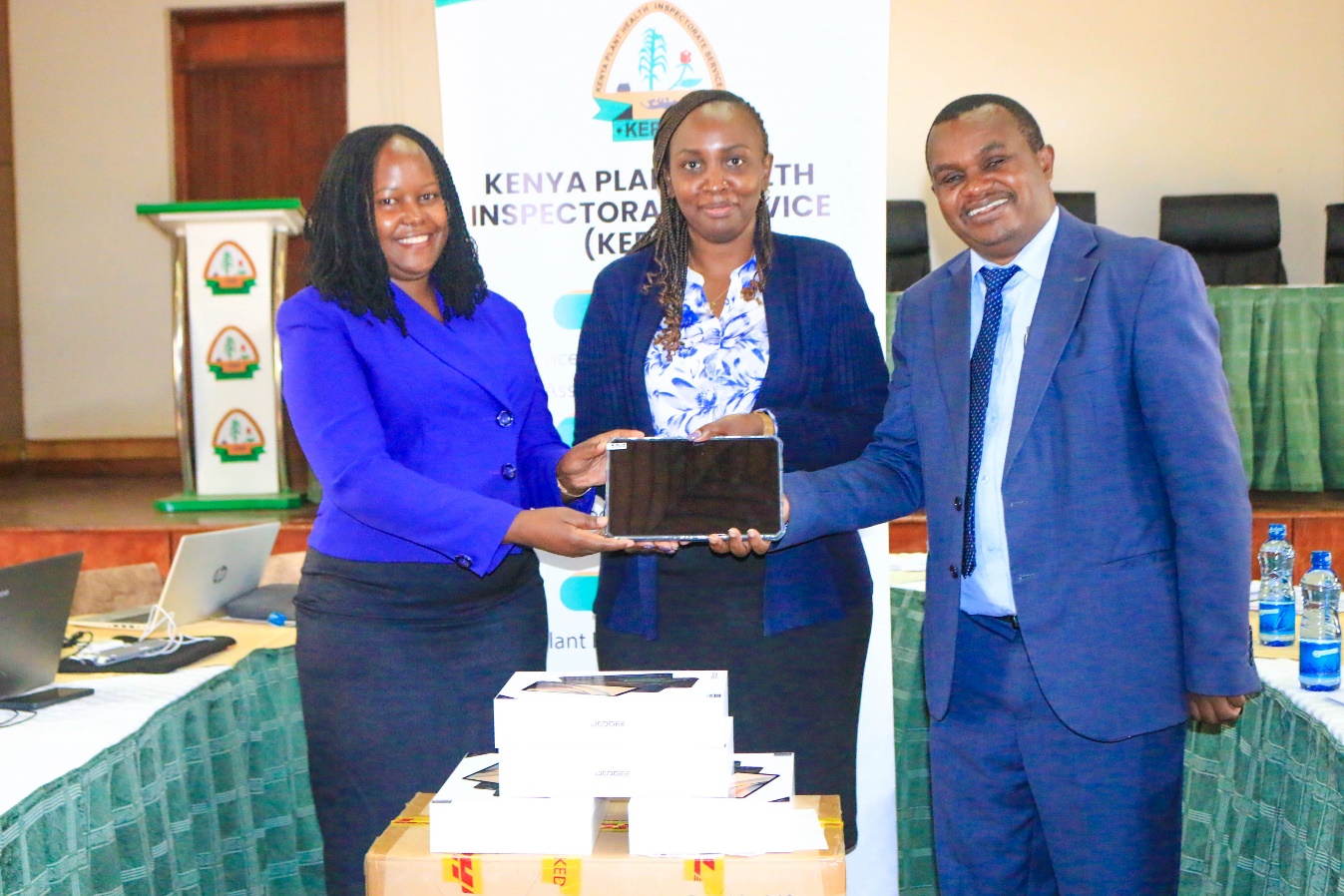
From right: Director Phytosanitary and Biosecurity Services Dr Isaac Macharia, Director Corporate Services Ms. Nancy Ndumia and Acting Director Laboratory Services Ms. Florence Munguti with one of 40 tablets that KEPHIS has received from the United States Department of Agriculture (USDA) Animal and Plant Inspection Service (APHIS) through the International Plant Protection Convention. The gadgets will be used for pest surveillance in a bid to mitigate food security in the country.
IPPC website : https://www.ippc.int/en/
USDA website : https://www.aphis.usda.gov/
IAPSC website : https://auiapsc.org/
FAO website : https://www.fao.org/kenya/en/
KEPHIS website: https://kephis.go.ke/